Unforgettable & Unique Canadian Food Experiences Await
unique canadian food experiences

Unforgettable & Unique Canadian Food Experiences Await

Embark on a culinary journey across Canada, savoring distinct flavors and authentic local traditions.

Taste Canada Now

Key Takeaways

  • ✓ Canada's culinary landscape is incredibly diverse, reflecting its vast geography and multicultural heritage.
  • ✓ Many unique Canadian dishes are deeply tied to regional ingredients and historical influences.
  • ✓ Food festivals and culinary tours offer immersive ways to experience Canadian gastronomy.
  • ✓ From wild game to seafood, and Indigenous ingredients to European influences, Canadian food tells a rich story.

How It Works

1
Identify Your Culinary Interest

Determine if you're seeking sweet, savory, adventurous, or traditional Canadian food experiences. This helps narrow down the vast options available.

2
Choose Your Region

Canada's provinces and territories each boast distinct culinary identities. Select a region that aligns with your desired food adventure, be it Atlantic seafood or Western bison.

3
Research Local Delicacies & Eateries

Once a region is chosen, dive into local guides and recommendations for specific dishes, restaurants, and food markets. Look for establishments known for authentic regional specialties.

4
Embrace the Experience

Beyond just eating, engage with the food's story, meet local producers, and participate in culinary events. True unique Canadian food experiences are about immersion.

Exploring Canada's Regional Culinary Delights

Group of friends enjoying a festive Canada Day celebration indoors with food and decorations. Photo: Cedric Fauntleroy / Pexels
Canada, a nation of immense geographical and cultural diversity, offers a culinary landscape as varied and captivating as its natural wonders. When discussing unique Canadian food experiences, it's essential to understand that 'Canadian cuisine' isn't a monolithic entity but rather a rich tapestry woven from regional specialties, Indigenous traditions, and the influences of countless immigrant communities. From the Atlantic to the Pacific, and up into the Arctic, each province and territory boasts its own distinct flavors, ingredients, and culinary customs, making a food journey across the country an adventure in itself. In the Atlantic provinces, the ocean dictates much of the menu. Nova Scotia, for instance, is renowned for its succulent lobster rolls, often featuring generous chunks of fresh, sweet lobster meat lightly dressed and served on a toasted bun. Beyond lobster, don't miss the chance to try Halifax donairs, a unique take on the gyro with a distinctively sweet garlic sauce, a late-night staple beloved by locals. New Brunswick offers delectable dulse, a dried seaweed snack rich in minerals, and fiddleheads, the coiled fronds of young ferns that appear in spring, often steamed or sautéed. Prince Edward Island, famous for its red soil, produces some of the world's best potatoes, which find their way into everything from hearty stews to crispy fries. Newfoundland and Labrador, a place known for its rugged beauty and resilient people, offers an incredibly unique food experience with its Jiggs' Dinner – a boiled meal of salt beef, root vegetables, and pease pudding, a true comfort food reflecting the province's history. The province also embraces wild game and berries, with partridgeberry tarts and bakeapple (cloudberry) jam being local favorites. These Atlantic provinces provide a deep dive into seafood traditions and hearty, comforting meals that speak to their maritime heritage. Discover more about Atlantic Canadian cuisine and its incredible bounty. Moving westward into Quebec, the culinary scene shifts dramatically, heavily influenced by its French heritage. Poutine, while now available nationwide, originated here and remains the quintessential Quebecois dish: a simple yet sublime combination of crispy French fries, squeaky cheese curds, and rich brown gravy. But Quebec's culinary offerings extend far beyond poutine. Maple syrup, a cornerstone of Canadian identity, is celebrated here in countless forms, from maple taffy on snow to maple-glazed ham and sugary pies. Tourtière, a savory meat pie, is a festive staple, especially during the holidays, with regional variations showcasing different fillings. Smoked meat sandwiches, particularly those from Montreal's delis, are legendary – piled high with tender, peppery brisket on rye bread. These dishes are not just food; they are cultural touchstones, reflecting centuries of tradition and innovation. The province's vibrant food markets, like Jean-Talon Market in Montreal, offer an immersive experience into the local produce and artisanal goods, providing a true taste of Quebecois life.

From Prairies to Pacific: A Culinary Journey West
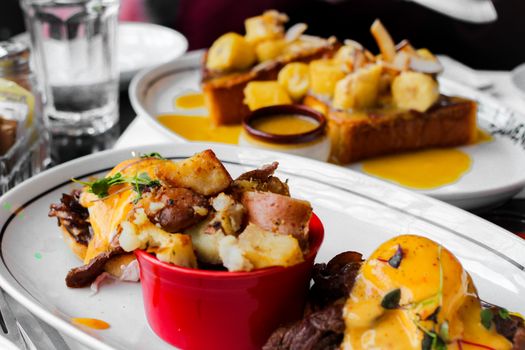
Close-up of delicious eggs benedict and banana topping toast served in Montreal cafe. Photo: Jane T D. / Pexels
As we continue our culinary exploration across Canada, the Prairies – Manitoba, Saskatchewan, and Alberta – offer a different, yet equally compelling, set of unique Canadian food experiences. This vast agricultural heartland is defined by its fertile lands, producing grains, beef, and a vibrant array of produce. In Alberta, beef is king. The province is renowned for its high-quality, often grass-fed, beef, making a perfectly cooked steak or prime rib an absolute must-try. Beyond steakhouses, don't overlook bison, a lean and flavorful alternative that speaks to the region's historical connection with the majestic animal. Wild game, such as elk and venison, also feature prominently in local cuisine, especially in more upscale or traditional establishments. Saskatchewan, often called the 'breadbasket of Canada,' celebrates its agricultural bounty. Saskatoon berries, a sweet and tart native fruit, are a provincial icon, gracing pies, jams, and even liqueurs. Perogies and kielbasa, reflecting the strong Eastern European immigrant influence, are beloved comfort foods found in many small towns and family kitchens across the Prairies. Manitoba, with its diverse population, offers a fusion of flavors. Winnipeg, in particular, is known for its vibrant culinary scene, where traditional Indigenous ingredients meet global influences. Bannock, a simple yet versatile unleavened bread, is a staple across the Prairies and a delicious accompaniment to many meals, often served with jam or butter, or as part of a savory dish. The Prairies embody a hearty, farm-to-table ethos, where the land's bounty is celebrated in robust and comforting dishes. Moving further west to British Columbia, the culinary scene again transforms, heavily influenced by its Pacific coastline, lush forests, and strong Asian immigrant communities. Seafood here is paramount, with wild Pacific salmon being the star. Whether smoked, grilled, or baked, experiencing fresh B.C. salmon is an unforgettable unique Canadian food experience. Oysters, Dungeness crab, and halibut are also abundant and expertly prepared. Beyond seafood, B.C. is a haven for fresh, seasonal produce, particularly in the Okanagan Valley, which is not only a prime wine-producing region but also a source of exquisite fruits and vegetables. Farm-to-table dining is a way of life here, with many restaurants emphasizing local and organic ingredients. The province's proximity to Asia has also profoundly shaped its food culture, leading to some of the best and most authentic Asian cuisine outside of Asia itself, particularly Japanese, Chinese, and Vietnamese dishes. Vancouver, in particular, is a melting pot of culinary innovation, offering everything from exquisite sushi to dim sum. The craft beer and burgeoning wine industry also contribute significantly to the local food scene, with many wineries and breweries offering pairing experiences. The diverse landscapes of British Columbia, from ocean to mountains, are reflected in its vibrant and sophisticated culinary offerings, making it a paradise for food lovers seeking fresh, high-quality ingredients and international flavors. This westernmost province truly offers a unique blend of natural bounty and global influences, creating a distinctive food identity that stands out within the Canadian landscape. The emphasis on sustainability and local sourcing also adds another layer of appreciation to the dining experience in B.C.

Indigenous Culinary Traditions and Northern Delicacies

A group of people enjoying a Canadian-themed meal indoors, showcasing cultural diversity and celebration. Photo: Cedric Fauntleroy / Pexels
No exploration of unique Canadian food experiences would be complete without delving into the rich and ancient culinary traditions of Indigenous peoples across the country. For millennia, First Nations, Inuit, and Métis communities have cultivated a deep connection to the land and waters, developing sophisticated food systems based on hunting, gathering, fishing, and sustainable harvesting. These traditions are a cornerstone of Canadian food heritage, offering flavors and ingredients that are truly indigenous to this land. Learning about and tasting Indigenous cuisine is not just about food; it's about connecting with history, culture, and a profound respect for nature. Key Indigenous ingredients often include wild game such as bison, venison, and elk, prepared using traditional smoking, drying, or roasting techniques. Fish, particularly salmon in the West and arctic char in the North, holds immense cultural and nutritional significance. Berries like Saskatoons, blueberries, cranberries, and chokecherries are gathered and used in various ways – fresh, dried, or made into jams and pemmican (a nutrient-dense mixture of dried meat, fat, and berries). Wild rice, harvested from lakes in central Canada, is another important staple. Bannock, a simple fry bread or baked bread, is a universally recognized Indigenous food, often served with stews, soups, or as a sweet treat with jam. Many Indigenous restaurants and culinary initiatives are emerging across Canada, offering opportunities to experience these authentic flavors in contemporary settings, often with storytelling and cultural education integrated into the dining experience. These establishments are vital in preserving and promoting Indigenous foodways, offering a respectful and delicious way to engage with Canada's original inhabitants' culinary heritage. Explore Indigenous food experiences in Canada to deepen your understanding. Further north, in the Yukon, Northwest Territories, and Nunavut, the extreme climate dictates a distinct set of unique Canadian food experiences. Here, the diet revolves heavily around what can be hunted, fished, and gathered from the vast, unforgiving landscape. Arctic char, a cold-water fish with a rich, buttery flavor, is a prized delicacy, often served smoked or pan-fried. Muskox, a shaggy, bovine-like animal, offers lean, tender meat, while caribou and reindeer are also important sources of protein. Berries that thrive in the short Arctic summer, such as cloudberries (bakeapples) and cranberries, are gathered for jams, sauces, and desserts. Muktuk, the skin and blubber of bowhead whale, is a traditional Inuit food, consumed raw or frozen, offering a unique taste of the Arctic's ancestral diet. These northern culinary traditions are not just about survival; they represent a deep knowledge of the land, sustainable practices, and a strong community spirit. Experiencing food in the North is often about sharing, storytelling, and connecting with the land in a way that is profoundly different from anywhere else in Canada. Food tours focusing on Indigenous and Northern cuisine are increasingly available, providing guided opportunities to taste these unique flavors and learn directly from local communities. The authenticity and connection to the environment found in these northern culinary adventures are unparalleled, offering a truly distinctive insight into Canada's diverse food landscape.

Maximizing Your Unique Canadian Food Experiences: Tips & Mistakes to Avoid

Friends gathered indoors for a festive Canada Day celebration with food and drinks. Photo: Cedric Fauntleroy / Pexels
To truly unlock the best unique Canadian food experiences, a little preparation and an open mind go a long way. Here are some essential tips to help you make the most of your culinary adventures across the Great White North, along with common mistakes to steer clear of. **Tips for an Unforgettable Culinary Journey:** * **Embrace Local Markets:** Farmers' markets, fish markets, and specialty food stores are goldmines for local ingredients and artisanal products. Engage with vendors, ask about their produce, and you might discover a hidden gem or a new favorite snack. Examples include Granville Island Market in Vancouver or Jean-Talon Market in Montreal. * **Seek Out Food Festivals:** Canada hosts numerous food and drink festivals throughout the year, celebrating everything from maple syrup and lobster to craft beer and international cuisines. These events offer a fantastic opportunity to sample a wide variety of dishes in one place and immerse yourself in local culture. * **Try Indigenous-Owned Restaurants:** Support and experience the rich culinary heritage of Canada's Indigenous peoples. Many restaurants are now showcasing traditional ingredients and techniques in contemporary ways, offering a profound cultural and gastronomic experience. * **Don't Be Afraid of 'Comfort Food':** While high-end dining is available, some of Canada's most unique and beloved dishes are simple, hearty comfort foods deeply rooted in history and community. Think poutine, tourtière, or Jiggs' Dinner. * **Pair with Local Beverages:** Canada has a thriving craft beer scene, excellent wines (especially from Niagara and Okanagan), and unique spirits. Ask for local pairings to enhance your meal. * **Engage with Locals:** The best recommendations often come from the people who live there. Don't hesitate to ask hotel staff, tour guides, or even fellow diners for their favorite local spots or must-try dishes. **Common Mistakes to Avoid:** * **Sticking Only to Tourist Traps:** While popular spots have their merits, often the most authentic and unique experiences are found slightly off the beaten path. Do some research or ask for local recommendations. * **Underestimating Regional Diversity:** Assuming Canadian food is homogenous is a big mistake. As explored earlier, the culinary landscape changes dramatically from province to province. Don't expect the same dishes in Halifax as you would in Calgary. * **Not Booking Ahead:** For popular restaurants, especially in major cities or during peak tourist season, reservations are often essential. Don't miss out on a desired dining experience due to lack of planning. * **Ignoring the Seasons:** Canada's climate means seasonal ingredients are crucial. Fiddleheads in spring, fresh berries in summer, pumpkin in fall – eating seasonally ensures the freshest and most flavorful experiences. * **Focusing Only on Sweet:** While maple syrup and Nanaimo bars are delicious, Canadian cuisine offers a vast array of savory dishes, wild game, and seafood that should not be overlooked. * **Not Being Adventurous:** Some unique Canadian foods might seem unusual at first glance (e.g., dulse, seal meat in the North). Be open to trying new things; you might discover a new favorite. The true essence of unique Canadian food experiences lies in exploration and an open palate.

Comparison

FeatureEast Coast Seafood TrailQuebec Poutine & Maple RouteB.C. Farm-to-Table & Wine
Primary FocusFresh seafood, maritime comfort foodFrench-Canadian classics, maple productsLocal produce, Pacific seafood, wine
Key DishesLobster rolls, Jiggs' Dinner, Halifax DonairPoutine, Tourtière, Maple TaffyWild Salmon, Oysters, Okanagan Wine
Best SeasonSummer/FallSpring (Maple), Winter (comfort food)Summer/Fall
Cultural Immersion
Adventure LevelModerateLow to ModerateModerate to High
Typical CostMid-HighLow to MidMid-High

What Readers Say

"My trip to Newfoundland for Jiggs' Dinner was one of the most unique Canadian food experiences I've ever had. The salt beef and pease pudding were surprisingly delicious, and the warmth of the locals made it truly special."

Sarah L. · Toronto, ON

"I thought I knew Canadian food, but the Indigenous tasting menu in Vancouver blew me away. The smoked salmon prepared traditionally was incredible, and learning about the ingredients' history was fascinating."

Mark D. · Seattle, WA

"We did a maple syrup farm tour in Quebec and ended up with enough maple products to last a year! The maple taffy on snow was a revelation, and the tourtière was the best savory pie I've ever tasted."

Emily R. · London, UK

"While the Halifax donair was a bit messy, the flavor was genuinely unique and addicting. It's definitely a late-night treat, not a gourmet meal, but an essential part of the East Coast food scene."

David P. · Calgary, AB

"As a seafood lover, British Columbia's fresh salmon and oysters were a dream come true. Every meal felt incredibly fresh and vibrant, a true reflection of the pristine Pacific waters."

Jessica M. · Melbourne, AUS

Frequently Asked Questions

What are the most iconic unique Canadian food experiences?

The most iconic unique Canadian food experiences often include trying authentic poutine in Quebec, indulging in fresh lobster rolls in the Maritimes, savoring high-quality beef in Alberta, experiencing Indigenous cuisine featuring wild game and bannock, and tasting fresh wild Pacific salmon in British Columbia. Each offers a distinct flavor profile and cultural connection.

Is Canadian food just poutine and maple syrup?

Absolutely not! While poutine and maple syrup are iconic, they only scratch the surface of Canada's diverse culinary landscape. Canadian food encompasses a vast array of regional specialties, Indigenous traditions, and influences from countless immigrant communities, offering everything from hearty Atlantic stews to sophisticated West Coast fusion cuisine.

How can I find authentic Indigenous food experiences?

To find authentic Indigenous food experiences, look for Indigenous-owned restaurants, cultural centers that offer culinary programs, and specialized food tours focused on Indigenous cuisine. Research local Indigenous tourism organizations in the region you plan to visit, as they often have resources and recommendations for respectful and genuine experiences.

How expensive are unique Canadian food experiences?

The cost of unique Canadian food experiences varies widely depending on the region and type of dining. You can find budget-friendly options like food trucks and local diners for under $20, while mid-range restaurants might cost $30-60 per person. High-end dining or specialized culinary tours can exceed $100 per person. Planning and research can help manage your budget effectively.

How does Canadian food compare to American cuisine?

While there are some similarities due to proximity, Canadian cuisine has distinct differences. It often features stronger British and French influences, unique Indigenous ingredients, and a greater emphasis on specific regional specialties like game meats, specific seafood (like Atlantic lobster), and wild berries. American cuisine often has a broader 'melting pot' identity, but Canada's regionality is more pronounced in its food culture.

Who should seek out unique Canadian food experiences?

Anyone with an adventurous palate and a curiosity for culture should seek out unique Canadian food experiences. Foodies, travelers looking for authentic local immersion, cultural explorers, and those interested in sustainable and indigenous food systems will find Canada's culinary scene incredibly rewarding and diverse.

Are there any health or safety concerns with trying unique Canadian foods?

Generally, trying unique Canadian foods is very safe, especially when dining at established restaurants and markets. As with any travel, be mindful of food allergies and inform servers of any dietary restrictions. When trying wild game or foraged foods, ensure they are sourced and prepared by reputable, knowledgeable providers to avoid any potential health concerns.

What are the emerging trends in unique Canadian food experiences?

Emerging trends in unique Canadian food experiences include a growing focus on Indigenous food sovereignty and culinary revival, sustainable and hyper-local sourcing, nose-to-tail dining with an emphasis on wild game, and the innovative fusion of traditional Canadian ingredients with global flavors, particularly from Asian and European cuisines. Craft beverage pairings are also becoming increasingly popular.

Embark on your own culinary adventure and discover the myriad of unique Canadian food experiences waiting to tantalize your taste buds. From coast to coast, Canada offers a journey of flavors, stories, and unforgettable meals that truly celebrate its diverse heritage. Start planning your delicious exploration today!

Topics: unique canadian food experiencesCanadian cuisinefood tourism Canadaregional Canadian foodculinary travel Canada
Leo List
Brampton weed
Adultwork EstrelaBet Vai de Bet R7 Bet Betão Galera Bet Rainbet Bet9ja Shop SportyBet BetKing Sisal Loto Foot Hollywoodbets YesPlay Odibets RushBet Jugabet BetWarrior BetCity MSport betPawa Fortebet