Mastering the Art: How to Make Bannock Bread Recipe
how to make bannock bread recipe

Mastering the Art: How to Make Bannock Bread Recipe

Unlock the secrets to baking delicious bannock bread, a Canadian culinary tradition, with our easy-to-follow guide.

Start Baking Now!

Key Takeaways

  • ✓ Bannock is a versatile quick bread, traditionally made by Indigenous peoples in Canada.
  • ✓ It requires minimal ingredients: flour, leavening agent, fat, and liquid.
  • ✓ Can be cooked in various ways: pan-fried, baked, deep-fried, or roasted over a fire.
  • ✓ Adaptable with sweet or savoury additions, making it perfect for any meal.

How It Works

1
Gather Your Basic Ingredients

Ensure you have all the necessary components: flour, baking powder, salt, a fat (like lard or oil), and a liquid (water or milk). Precision in measurements is key for consistency.

2
Mix Dry and Wet Components

Combine the dry ingredients thoroughly in a large bowl, then gradually incorporate the fat and liquid. Mix until just combined, being careful not to overmix, which can lead to tough bannock.

3
Form and Shape Your Dough

Lightly flour your hands and a surface, then gently knead the dough a few times. Shape it into a disc or smaller individual portions, depending on your preferred cooking method.

4
Cook Using Your Chosen Method

Whether you're pan-frying, baking, or cooking over an open fire, ensure your cooking surface is adequately prepared and heated. Cook until golden brown and cooked through, flipping as needed.

The Rich History and Cultural Significance of Bannock Bread
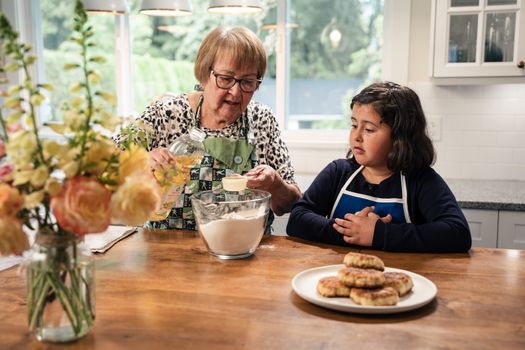
An intimate kitchen scene of a grandmother teaching her granddaughter how to bake traditional bannock. Photo: Jelly Marketing / Pexels
Bannock bread, a staple for many Indigenous communities across Canada, holds a history as rich and deep as the land itself. While often associated with Indigenous cuisine, the origins of bannock are complex and layered, reflecting centuries of cultural exchange and adaptation. The term 'bannock' itself is of Scottish origin, referring to a round, flat loaf, traditionally made with oats or barley. However, the version of bannock widely recognized in Canada today, primarily made with wheat flour, baking powder, and water, became prevalent during the fur trade era. Indigenous peoples, who had their own traditional flatbreads and corn-based preparations, adopted and adapted this European-introduced concept, transforming it into a uniquely Canadian culinary icon. This adaptation was born out of necessity and resourcefulness. As European traders and settlers brought new ingredients like wheat flour, lard, and baking powder, Indigenous communities incorporated them into their diets. These ingredients were often easier to transport and store during long journeys or in remote areas, making bannock an ideal, versatile food source. It provided quick energy and was simple to prepare with minimal equipment, making it perfect for life on the land, whether hunting, trapping, or travelling. Bannock became more than just food; it became a symbol of resilience, adaptation, and shared history. It served as a vital sustenance during challenging times and continues to be a central feature at community gatherings, ceremonies, and family meals. Understanding this history adds a profound layer of appreciation when you learn how to make bannock bread recipe. It’s not just about mixing ingredients; it’s about connecting with a culinary legacy that bridges cultures and generations. The ability to create this simple yet deeply meaningful bread is a skill passed down through families, embodying stories, traditions, and the enduring spirit of Indigenous cultures. Modern interpretations of bannock continue to evolve, with chefs and home cooks experimenting with different flours, fats, and flavourings, but the core essence remains: a comforting, adaptable bread that nourishes both body and soul. Its continued presence in Canadian cuisine speaks volumes about its enduring appeal and its cultural significance as a truly Canadian comfort food. For those new to Canadian culinary traditions, encountering bannock is often a delightful surprise, offering a taste of history and hospitality.

Essential Ingredients and Tools for Perfect Bannock
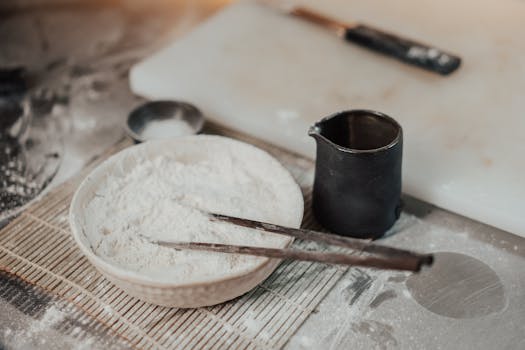
Close-up of flour in a ceramic bowl with chopsticks, set on a kitchen table amidst baking preparation. Photo: Mikhail Nilov / Pexels
Creating the perfect bannock begins with understanding your ingredients and having the right tools on hand. The beauty of bannock lies in its simplicity, requiring only a few basic items that are likely already in your pantry. At its core, bannock is made from flour, a leavening agent, salt, fat, and liquid. While these seem straightforward, the quality and type of each can subtly influence the final product. **Flour:** All-purpose white flour is the most common choice for bannock, yielding a light and fluffy texture. However, don't shy away from experimenting with whole wheat flour for a nuttier flavour and denser crumb, or a blend of both. Some traditional recipes might even incorporate cornmeal for a unique texture. **Leavening Agent:** Baking powder is the go-to for modern bannock, providing the lift that makes it soft and airy. Ensure your baking powder is fresh; expired baking powder will result in flat, dense bannock. Some older recipes might use baking soda in conjunction with an acidic liquid like buttermilk, but baking powder offers a more consistent rise. **Salt:** A pinch of salt is crucial for enhancing the flavour of the bread, balancing the sweetness of any added ingredients, and bringing out the natural taste of the flour. **Fat:** This is where much of the flavour and texture comes from. Traditionally, lard was often used, providing a rich, tender crumb. Vegetable shortening, butter, or even a neutral-tasting oil (like canola or sunflower) are excellent modern alternatives. The fat contributes to the bread's tenderness and helps prevent it from becoming tough. **Liquid:** Water is the simplest and most common liquid, making for a very basic, adaptable dough. Milk or buttermilk can be used for a richer, softer bannock with a slightly tangy flavour. Even beer or soda water can be used for a unique twist, adding flavour and additional leavening. **Optional Additions:** This is where you can truly personalize your bannock. For savoury versions, consider adding dried herbs (rosemary, thyme), grated cheese, chopped wild onions, or even bits of cooked bacon. For a sweet treat, dried berries (blueberries, cranberries), cinnamon, or a touch of sugar can transform your bannock into a delightful dessert. **Tools:** You don't need much, which is part of bannock's appeal. A large mixing bowl, a measuring cup and spoons, a wooden spoon or spatula for mixing, and a clean, lightly floured surface for kneading are essential. Depending on your cooking method, you'll need a cast-iron skillet (ideal for stovetop or campfire), a baking sheet for oven baking, or a deep pot for deep-frying. For campfire cooking, a stick or a flat rock can even suffice. Having these basic tools and understanding the role of each ingredient will set you up for success when you learn how to make bannock bread recipe, allowing you to create a delicious and authentic experience every time.

Step-by-Step Guide: How to Make Bannock Bread Recipe (Pan-Fried Method)
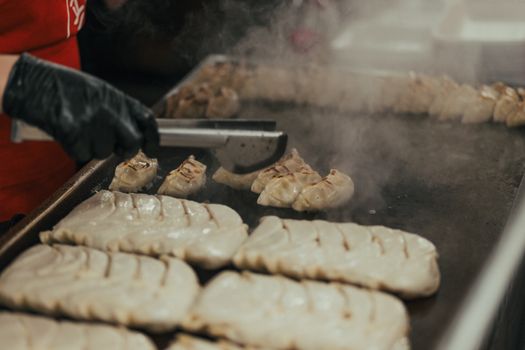
Close-up of a chef cooking dumplings on a griddle in a commercial kitchen. Photo: Th2city Santana / Pexels
While there are many ways to cook bannock, the pan-fried method is perhaps the most accessible and popular for home cooks, offering a perfect balance of crispy exterior and fluffy interior. This detailed guide will walk you through each stage, ensuring a delicious outcome. **Yields:** 6-8 servings **Prep time:** 15 minutes **Cook time:** 20-30 minutes **Ingredients:** * 3 cups all-purpose flour * 1 tablespoon baking powder (ensure it's fresh!) * 1 teaspoon salt * 1/4 cup cold lard, vegetable shortening, or butter (cut into small pieces) * 1 to 1 1/4 cups cold water or milk (start with 1 cup and add more if needed) * 2-3 tablespoons vegetable oil or lard for frying **Equipment:** * Large mixing bowl * Measuring cups and spoons * Pastry blender or your fingertips * Cast-iron skillet or heavy-bottomed frying pan * Spatula **Instructions:** 1. **Prepare Your Dry Ingredients:** In your large mixing bowl, combine the flour, baking powder, and salt. Whisk them together thoroughly to ensure the leavening agent is evenly distributed. This step is crucial for an even rise. If you're adding any dry flavourings like sugar or dried herbs, mix them in now. 2. **Incorporate the Fat:** Add the cold lard, shortening, or butter pieces to the dry ingredients. Using a pastry blender or your fingertips, cut the fat into the flour mixture until it resembles coarse crumbs. Some larger pea-sized pieces of fat are desirable as they contribute to the tenderness and flakiness of the bannock. Working quickly helps keep the fat cold, preventing it from melting too much. 3. **Add the Liquid:** Gradually pour in 1 cup of cold water or milk, mixing with a wooden spoon or your hands until a shaggy dough forms. Be careful not to overmix. The dough should just come together. If it's too dry and crumbly, add the remaining 1/4 cup of liquid, a tablespoon at a time, until the dough is cohesive but not sticky. The exact amount of liquid can vary depending on the humidity and type of flour. 4. **Lightly Knead and Shape:** Turn the dough out onto a lightly floured surface. Gently knead it just a few times (4-5 times at most) until it forms a soft, somewhat smooth ball. Avoid excessive kneading, as this will develop the gluten and result in tough bannock. Flatten the dough into a round disc, about 1 to 1.5 inches thick. You can also divide it into smaller portions for individual bannock pieces. 5. **Prepare for Frying:** Heat the vegetable oil or lard in your cast-iron skillet or heavy-bottomed frying pan over medium heat. You want enough oil to cover the bottom of the pan by about 1/4 inch. Test the oil by dropping a tiny piece of dough in; it should sizzle gently. 6. **Fry the Bannock:** Carefully place the dough disc (or individual pieces) into the hot oil. Fry for about 5-8 minutes per side, or until golden brown and cooked through. The cooking time will vary depending on the thickness of your bannock and the heat of your pan. You might need to adjust the heat to prevent the outside from browning too quickly while the inside remains raw. For thicker bannock, you can cover the pan for a few minutes after flipping to help it cook through. 7. **Check for Doneness:** To ensure your bannock is cooked through, you can gently tap the top; it should sound hollow. Alternatively, insert a toothpick into the centre; it should come out clean. The internal temperature should reach around 200-210°F (93-99°C). 8. **Serve Warm:** Transfer the cooked bannock to a wire rack lined with paper towels to drain any excess oil. Serve warm, sliced or broken into pieces. Bannock is incredibly versatile and delicious with butter, jam, maple syrup, or as an accompaniment to stews and soups. Learning how to make bannock bread recipe using this method provides a foundational skill you can adapt to other cooking environments. Enjoy your freshly made, comforting bannock!

Tips, Troubleshooting, and Creative Variations for Your Bannock
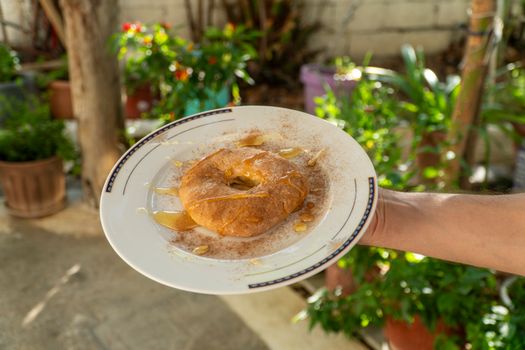
Delicious sweet tiganopsomo topped with honey. Shot in an outdoor setting in Schimatari, Greece. Photo: Alex Ravvas / Pexels
Mastering bannock is a journey, and like any culinary art, there are tips to enhance your results, ways to troubleshoot common issues, and endless opportunities for creative variations. **Tips for Success:** * **Don't Overmix:** This is the golden rule for tender bannock. Overmixing develops gluten, leading to a tough, chewy texture. Mix just until the ingredients are combined. * **Cold Fat, Cold Liquid:** Using cold fat (lard, butter, shortening) and cold liquid helps create pockets of steam during cooking, resulting in a flakier, more tender crumb. * **Fresh Leavening:** Ensure your baking powder is fresh. Test it by mixing a teaspoon with a little hot water; it should fizz vigorously. * **Proper Pan Temperature:** For pan-frying, a medium heat is crucial. Too hot, and the outside burns before the inside cooks; too low, and it absorbs too much oil, becoming greasy. * **Rest the Dough (Optional but Recommended):** Allowing the dough to rest for 10-15 minutes after mixing can help relax the gluten, leading to a more tender bannock. **Common Troubleshooting:** * **Bannock is tough/chewy:** Almost always due to overmixing. Mix less next time. * **Bannock is flat/dense:** Likely old baking powder, or not enough baking powder, or the fat was too warm and melted too quickly. * **Bannock is greasy:** The oil wasn't hot enough when frying, or too much oil was used. Also, ensure you drain it on paper towels after cooking. * **Bannock is raw in the middle:** Heat was too high, browning the outside too quickly. Reduce heat and/or cook for longer. For thick bannock, covering the pan can help steam the inside. **Creative Variations:** * **Sweet Bannock:** Add 1-2 tablespoons of sugar to the dry ingredients. Incorporate dried cranberries, blueberries, raisins, or chocolate chips. A pinch of cinnamon or nutmeg can also be delightful. * **Savoury Bannock:** Mix in grated cheddar cheese, finely chopped green onions, a tablespoon of dried herbs (rosemary, thyme, sage), or even crispy bacon bits. Serve these with chili or soup. * **Herb Bannock:** Add a mix of fresh or dried herbs like rosemary, thyme, and parsley to the dough for an aromatic twist. * **Seed Bannock:** Incorporate poppy seeds, sesame seeds, or sunflower seeds into the dough for added texture and nutrition. You can also sprinkle them on top before cooking. * **Buttermilk Bannock:** Replace water with buttermilk for a slightly tangy flavour and a softer crumb. If using buttermilk, you can reduce the baking powder slightly (or even use baking soda if preferred). * **Deep-Fried Bannock (Fry Bread):** For a truly indulgent treat, shape the dough into smaller, thinner pieces and deep-fry them until puffed and golden. These are fantastic with powdered sugar or cinnamon sugar, or as a base for savoury toppings. * **Oven-Baked Bannock:** For a less hands-on approach, shape the dough into a round loaf, brush with a little milk or melted butter, and bake in a preheated oven at 375°F (190°C) for 25-35 minutes, or until golden brown and cooked through. This method yields a more traditional bread-like texture. * **Campfire Bannock:** Wrap strips of dough around a clean stick and roast slowly over hot coals (not direct flames) until golden brown. This is a classic outdoor method and a fun experience. Alternatively, cook in a cast-iron pan directly on the coals or a grill grate. Remember, the art of how to make bannock bread recipe is about experimentation and finding what you love. Don't be afraid to try new things and make it your own!

Comparison

FeaturePan-Fried BannockOven-Baked BannockCampfire Bannock
TextureCrispy exterior, soft interiorEvenly soft, bread-likeSmoky, rustic crust
Ease of PreparationEasy, quickEasy, less hands-onRequires outdoor setup, moderate skill
Equipment NeededSkillet, spatulaBaking sheet, ovenStick/cast iron, fire
Flavor ProfileRich, slightly oilyMild, wholesomeSmoky, earthy
Versatility for Add-ins
Best for Beginners
Time CommitmentShortMediumMedium to Long

What Readers Say

"This guide on how to make bannock bread recipe is fantastic! My first attempt came out perfectly golden and fluffy. The historical context really added to the experience."

Sarah M. · Vancouver, BC

"I've always wanted to try making bannock, and this recipe was so clear. The pan-fried method was easy to follow, and the bread disappeared in minutes!"

David L. · Calgary, AB

"The troubleshooting section saved my second batch! My first was a bit tough, but following the 'don't overmix' tip, the next one was incredibly tender. Highly recommend."

Aisha K. · Toronto, ON

"A very thorough article on how to make bannock bread recipe. I tried the sweet variation with cranberries, and it was a hit, though I prefer slightly less salt next time."

Mark R. · Halifax, NS

"As someone who camps frequently, the campfire bannock tips are invaluable. I made it over the fire last weekend, and it was the best part of our meal, a true outdoor delight."

Chloe P. · Edmonton, AB

Frequently Asked Questions

What is bannock bread and where does it come from?

Bannock is a type of quick bread that has become a significant staple in Canadian Indigenous cuisine. While the term itself has Scottish roots, the Canadian version evolved during the fur trade era, adapting European ingredients like wheat flour to create a versatile and nourishing bread essential for life on the land. It represents a blend of Indigenous resourcefulness and introduced ingredients.

Is bannock difficult to make for beginners?

Not at all! Bannock is celebrated for its simplicity and minimal ingredient list, making it an excellent recipe for beginner bakers. The key is to avoid overmixing the dough and to ensure your leavening agent is fresh. Our step-by-step guide is designed to make your first attempt a success.

Can I make bannock without a cast-iron skillet?

Absolutely! While a cast-iron skillet is ideal for pan-fried bannock due to its even heat distribution, you can use any heavy-bottomed frying pan. Bannock can also be baked in an oven on a baking sheet, deep-fried, or even cooked over an open campfire using a stick or flat rock.

What is the typical cost of ingredients for bannock?

The ingredients for bannock are very inexpensive, typically costing less than $5 for a batch that serves 6-8 people. You'll primarily need flour, baking powder, salt, a fat (like oil or shortening), and water or milk, all of which are common pantry staples. This makes it a very economical and accessible bread to make.

How does bannock compare to traditional yeast breads?

Bannock is a quick bread, meaning it uses baking powder (or baking soda) for leavening, rather than yeast. This results in a much faster preparation time as there's no need for rising. Yeast breads typically have a more complex flavour profile and a chewier texture, while bannock is generally softer, quicker to make, and often has a simpler, comforting taste.

Who would enjoy making and eating bannock bread?

Anyone looking for an easy, versatile, and comforting bread recipe will enjoy bannock. It's perfect for home cooks, campers, and those interested in exploring traditional Canadian and Indigenous cuisine. Its adaptability means it can be enjoyed as a side, a snack, or even a dessert, appealing to a wide range of tastes.

Are there any common allergens in bannock?

Traditional bannock primarily contains wheat (gluten) from the flour and dairy if milk is used. It can be made dairy-free by using water or a plant-based milk alternative and vegetable oil or shortening instead of butter/lard. For gluten-free versions, specific gluten-free flour blends would be required, though the texture may differ from traditional bannock.

What are some modern twists or future trends for bannock?

Modern bannock recipes are seeing creative twists, incorporating ingredients like sourdough starter for a tangy flavour, various seeds for added nutrition, or even being used as a base for gourmet sandwiches. There's a growing trend towards using locally sourced, traditional ingredients where possible, and exploring healthier flour alternatives while maintaining its comforting essence.

Now that you're equipped with the knowledge and techniques, it's time to bring the warmth and tradition of bannock bread into your home. Experiment with flavours, share with loved ones, and savour the rich history in every delicious bite. Start your bannock-making journey today!

Topics: how to make bannock bread recipetraditional bannock recipecampfire bannockeasy bannock breadindigenous bread
Leo List

DK Escorts LU Escorts AT Escorts SE Escorts FI Escorts CH Escorts DE Escorts HR Escorts IE Escorts GR Escorts CZ Escorts NO Escorts BE Escorts FR Escorts SI Escorts IL Escorts NL Escorts PL Escorts HU Escorts ES Escorts IT Escorts PT Escorts SK Escorts RO Escorts ZA Escorts UY Escorts US Escorts UK Escorts NZ Escorts AU Escorts
Brampton weed
Adultwork EstrelaBet Vai de Bet R7 Bet Betão Galera Bet Rainbet Bet9ja Shop SportyBet BetKing Sisal Loto Foot Hollywoodbets YesPlay Odibets RushBet Jugabet BetWarrior BetCity MSport betPawa Fortebet