Unpacking Canadian Food Culture Diversity: A Culinary Journey
canadian food culture diversity

Unpacking Canadian Food Culture Diversity: A Culinary Journey

Dive into Canada's rich and evolving food scene, a delicious tapestry woven from countless cultural threads.

Savor the Flavors

Key Takeaways

  • ✓ Canada's food culture is a mosaic, deeply influenced by Indigenous traditions, European colonization, and global immigration.
  • ✓ Regional specialties are prominent, reflecting diverse climates, historical settlements, and available resources.
  • ✓ Indigenous culinary practices, such as foraging and traditional cooking methods, form the foundational layer of Canadian food.
  • ✓ Poutine, Nanaimo bars, and maple syrup are iconic, but represent only a fraction of the nation's diverse offerings.

How It Works

1
Acknowledge Indigenous Roots

Understand that the first flavors of Canada originated from Indigenous peoples' deep connection to the land and its resources. Their sustainable practices and traditional ingredients laid the groundwork for future culinary developments.

2
Trace European Influences

Recognize how French and British colonization introduced new ingredients, cooking techniques, and culinary traditions that blended with existing Indigenous practices. This fusion created early Canadian staples and regional dishes.

3
Embrace Global Migration

Observe how waves of immigrants from around the world continuously enrich Canada's food landscape. Each community brings its unique culinary heritage, contributing to the country's unparalleled food diversity.

4
Explore Regional Specialties

Discover that Canada's vast geography and varied climates have fostered distinct regional food identities. From Atlantic seafood to Prairie grains and West Coast produce, each area offers unique culinary experiences.

The Indigenous Foundation of Canadian Cuisine

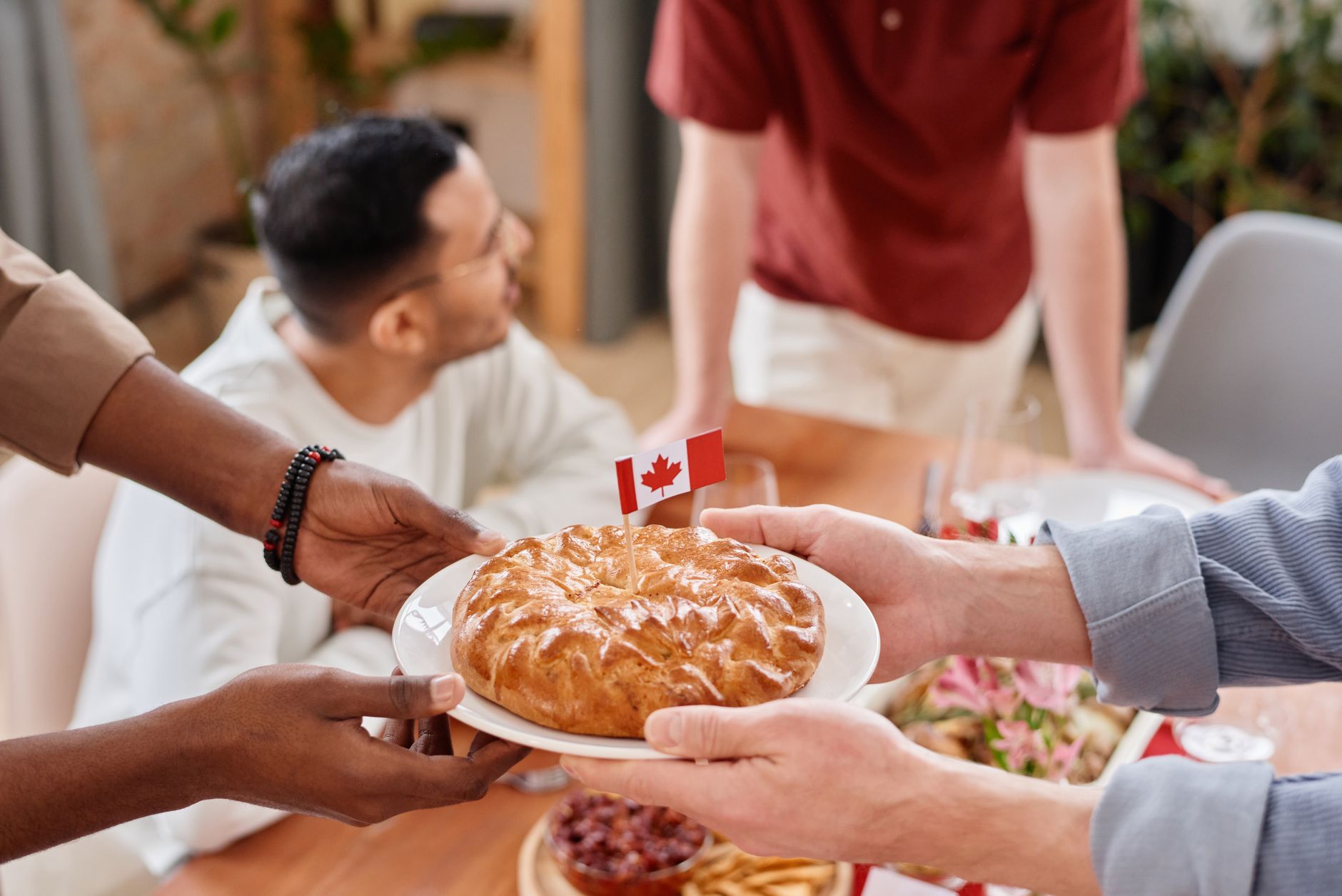
A diverse group of friends enjoying a festive meal indoors, celebrating Canada Day together. Photo: Cedric Fauntleroy / Pexels
Before the arrival of European settlers, the lands now known as Canada were home to diverse Indigenous nations, each with its own rich culinary traditions. These traditions, developed over millennia, were intrinsically linked to the environment, reflecting a profound understanding of local flora and fauna, seasonal cycles, and sustainable harvesting practices. Staples included wild game like caribou, moose, and bison; fish such as salmon and cod; and a variety of berries, roots, and wild greens. Maple syrup, often seen as a Canadian icon, was first harvested and processed by Indigenous peoples long before European contact. Traditional Indigenous cooking methods, such as smoking, drying, and pit cooking, preserved food and imparted unique flavors. The concept of 'eating local' and 'nose-to-tail' consumption was not a trend but a way of life, ensuring minimal waste and maximizing nutritional value. Bannock, a simple unleavened bread, is one of the most enduring Indigenous food items, adapted and adopted by many communities across Canada. The deep spiritual connection to the land and its bounty meant that food was not merely sustenance but also a central element in ceremonies, social gatherings, and cultural identity. Understanding this foundational layer is crucial to appreciating the true depth of Canadian food culture diversity. It highlights the ingenuity, resilience, and deep knowledge of the First Peoples, whose culinary legacy continues to influence and inspire contemporary Canadian chefs and food enthusiasts. This heritage is increasingly being celebrated and reclaimed, bringing ancient flavors and wisdom to modern tables and emphasizing the importance of sustainable and respectful food practices.

European Influences and the Birth of Regional Canadian Food

A diverse group of friends enjoying a festive Canada Day celebration indoors, sharing food and laughter. Photo: Cedric Fauntleroy / Pexels
The arrival of French and British settlers in the 16th and 17th centuries marked a significant turning point in the evolution of Canadian food culture. These new populations brought with them their own culinary traditions, ingredients, and farming techniques, which gradually integrated with or supplanted existing Indigenous practices. French settlers, primarily in what is now Quebec, introduced hearty peasant cooking, characterized by slow-cooked stews, tourtières (meat pies), and rich pastries. The abundance of game and local produce allowed for adaptations of classic French dishes, giving birth to distinct Québécois cuisine. Poutine, while a relatively modern invention, draws on the French-Canadian tradition of comfort food, combining fries, cheese curds, and gravy into an iconic dish. British influences, particularly in Ontario and the Atlantic provinces, led to a preference for roasted meats, pies, and puddings, often made with locally sourced ingredients like cod and root vegetables. The fishing industries of the Atlantic provinces, for instance, gave rise to a rich seafood culture, with dishes like cod tongues, lobster rolls, and fish and brews becoming regional staples. The early European settlers also introduced dairy farming, wheat cultivation, and new methods of food preservation, such as canning and pickling, which profoundly shaped the nascent Canadian diet. This period saw the blending of old-world techniques with new-world ingredients, creating a unique culinary identity that was distinctly Canadian, yet still bore the hallmarks of its European origins. The vastness of Canada also meant that these European influences evolved differently in various regions, leading to the emergence of diverse regional Canadian food identities, each with its own cherished dishes and culinary customs.

Waves of Immigration: Shaping Modern Multicultural Food Canada

Group of friends enjoying a festive Canada Day celebration indoors with food and decorations. Photo: Cedric Fauntleroy / Pexels
Canada's commitment to multiculturalism has profoundly shaped its food landscape, transforming it into a vibrant mosaic of global flavors. Beginning in the late 19th and throughout the 20th and 21st centuries, successive waves of immigrants from across Europe, Asia, Africa, and Latin America have introduced an astonishing array of culinary traditions. Each new community has brought its unique ingredients, cooking techniques, and beloved dishes, enriching the Canadian palate and expanding the definition of what constitutes 'Canadian food.' Italian immigrants brought pasta, pizza, and espresso; Chinese immigrants established Chinatowns across the country, popularizing dishes like dim sum and chop suey; and South Asian communities introduced aromatic curries, tandoori, and samosas. Today, it's common to find authentic Mexican tacos, Ethiopian injera, Vietnamese pho, and Middle Eastern shawarma alongside traditional Canadian fare in any major city. This influx of diverse cuisines has not only provided Canadians with an incredible variety of dining options but has also fostered a dynamic culinary exchange. Canadian chefs frequently draw inspiration from these global flavors, incorporating international ingredients and techniques into their own creations, leading to innovative fusion dishes. The rise of food festivals, ethnic markets, and specialty grocery stores further celebrates this multicultural richness, making diverse foods accessible to everyone. This ongoing process of culinary integration means that the concept of 'multicultural food Canada' is not static; it's a living, breathing entity that continues to evolve with each new arrival, ensuring that Canada's food culture remains one of the most exciting and diverse in the world. It’s a testament to the nation’s open arms, where food acts as a powerful bridge between cultures, fostering understanding and connection. Exploring these global influences is a journey through Canada's social history.

Embracing Local: Tips for Experiencing Canada's Culinary Richness

Colorful snack packages neatly displayed in a supermarket aisle showcasing Asian food variety. Photo: Allen Boguslavsky / Pexels
To truly appreciate the depth of Canadian food culture diversity, active exploration is key. Here are some tips to guide your culinary journey: * **Seek Out Indigenous Cuisine:** Look for restaurants, food trucks, or cultural centers that offer authentic Indigenous dishes. This is an excellent way to connect with the land's original flavors and support Indigenous culinary resurgence. * **Visit Farmers' Markets:** These markets are treasure troves of local produce, artisanal products, and often, prepared foods reflecting regional specialties. Chat with vendors to learn about the origin of their ingredients. * **Explore Ethnic Neighborhoods:** Wander through Chinatowns, Little Italy, Greektowns, and other culturally concentrated areas. These neighborhoods are vibrant hubs of authentic international cuisine, offering a taste of the world within Canada's cities. * **Try Regional Specialties:** Don't just stick to the well-known staples. In the Maritimes, try seafood chowder; in Quebec, explore tourtière; in the Prairies, look for bison burgers or perogies; and on the West Coast, savor fresh salmon and BC wines. * **Attend Food Festivals:** Canada hosts numerous food festivals throughout the year, celebrating everything from maple syrup and cranberries to specific ethnic cuisines. These events are fantastic opportunities to sample a wide variety of dishes and experience local culture. * **Engage with Local Chefs:** Many Canadian chefs are passionate about showcasing local ingredients and diverse culinary influences. Follow their work, dine at their restaurants, and learn about their approach to Canadian food. * **Cook at Home with Canadian Ingredients:** Experiment with Canadian-sourced ingredients like wild rice, fiddleheads, Saskatoon berries, or Canadian cheeses. This hands-on approach deepens your appreciation for the local bounty. By following these tips, you'll move beyond stereotypes and discover the nuanced, evolving, and incredibly delicious tapestry that is Canadian food culture diversity. It's a journey that promises not just great food, but a deeper understanding of Canada itself.

Comparison

FeatureIndigenous CuisineFrench-Canadian CuisineWest Coast FusionPrairie Staples
Key IngredientsWild game, berries, root vegetables, maplePork, potatoes, dairy, maple, root vegetablesSeafood, fresh produce, Asian spicesGrains, beef, perogies, pierogi, cabbage rolls
Cooking MethodsSmoking, drying, pit cooking, boilingBraising, stewing, baking (pies), fryingGrilling, steaming, stir-frying, sushi preparationRoasting, baking, deep-frying, pickling
Iconic DishesBannock, wild rice, moose stewPoutine, Tourtière, Pea SoupSalmon, Sushi (BC roll), Dim SumBison burger, Perogies, Saskatoon berry pie
Cultural SignificanceSpiritual, communal, sustainableComfort, tradition, family gatheringsFreshness, innovation, global influenceHearty, immigrant heritage, agricultural bounty

What Readers Say

"The depth of Canadian food culture diversity is truly astounding. I've lived here my whole life and am still discovering new regional and ethnic dishes that blow me away. It's a culinary adventure right at home."

Anya Sharma · Toronto, ON

"As a Québécois, I cherish our traditional foods, but I also love how seamlessly other cultures have woven their flavors into the Canadian fabric. It's a delicious testament to our multicultural identity."

Marc Dubois · Montreal, QC

"The article perfectly captures how Indigenous traditions and global influences create such a rich food scene. Thanks to this, I've started exploring more local Indigenous restaurants and have discovered incredible flavors."

Sarah Lee · Vancouver, BC

"While the focus on major cities is strong, I'd love to see even more emphasis on the unique contributions of smaller, rural communities to Canadian food culture diversity. Still, a very comprehensive and insightful read."

David Chen · Calgary, AB

"Coming from outside Canada, I was initially surprised by the sheer variety of food available. This article really helped me understand the historical and cultural reasons behind the amazing Canadian food culture diversity."

Elena Rodriguez · Halifax, NS

Frequently Asked Questions

What are the core elements contributing to Canadian food culture diversity?

The core elements are the foundational Indigenous culinary traditions, the historical influences of French and British colonization, and the continuous enrichment brought by waves of global immigration. These three pillars interact to create a unique and ever-evolving food landscape across the country.

Is Canadian food just poutine and maple syrup?

Absolutely not! While poutine and maple syrup are iconic and beloved, they represent only a tiny fraction of Canada's vast culinary offerings. Canadian food culture diversity encompasses everything from Atlantic seafood and Prairie grains to Indigenous wild game and a myriad of international cuisines.

How can I best experience the diversity of Canadian food?

To best experience it, seek out Indigenous restaurants, visit local farmers' markets, explore ethnic neighborhoods in major cities, try regional specialties when traveling, and attend food festivals. Engaging with local chefs and cooking with Canadian ingredients at home also deepens the experience.

Does Canadian food diversity mean there's no 'national' Canadian cuisine?

Instead of a single, monolithic 'national cuisine,' Canada boasts a vibrant mosaic of regional and multicultural food identities. This diversity itself is the defining characteristic of Canadian cuisine, reflecting its history as a nation built on immigration and respect for various cultural contributions. The 'national cuisine' is its diversity.

How does Canadian food compare to American food in terms of diversity?

Both Canada and the US are diverse nations, but Canadian food culture diversity is often characterized by a strong emphasis on regional distinctiveness, a deep reverence for Indigenous culinary revival, and a particularly strong influence from French-Canadian traditions alongside its broad multicultural contributions, which can feel distinct from the melting pot approach sometimes seen in the US.

Who benefits most from exploring Canadian food culture diversity?

Anyone with an interest in food, culture, and history will benefit. Tourists gain authentic local experiences, new immigrants find familiar tastes and connect with their heritage, and long-time residents can deepen their appreciation for their country's rich culinary tapestry and support local businesses.

Are there efforts to preserve traditional Canadian food practices?

Yes, there's a growing movement to preserve and revitalize traditional Canadian food practices, particularly Indigenous culinary traditions. This includes efforts to document recipes, promote traditional ingredients, support Indigenous food businesses, and educate the public about the historical and cultural significance of these foods.

What are some emerging trends in Canadian food culture diversity?

Emerging trends include a greater focus on sustainable and local sourcing, the rise of Indigenous-led culinary experiences, increased fusion cuisine that blends traditional Canadian ingredients with global flavors, and a strong emphasis on plant-based and healthy eating options, all while celebrating Canada's multicultural roots.

Embark on your own culinary adventure across Canada and discover the incredible richness of Canadian food culture diversity. From ancient Indigenous flavors to modern global fusions, there's a delicious story waiting to be savored in every region.

Topics: canadian food culture diversityCanadian cuisine historyregional Canadian foodIndigenous Canadian foodmulticultural food Canada
Leo List
Brampton weed
Adultwork EstrelaBet Vai de Bet R7 Bet Betão Galera Bet Rainbet Bet9ja Shop SportyBet BetKing Sisal Loto Foot Hollywoodbets YesPlay Odibets RushBet Jugabet BetWarrior BetCity MSport betPawa Fortebet